LED billboard vs static billboard vs tri-vision: which to book?
 Ahmed Al MasumDirector of Marketing, AD Pro · 19 November 2026 · 8 min read
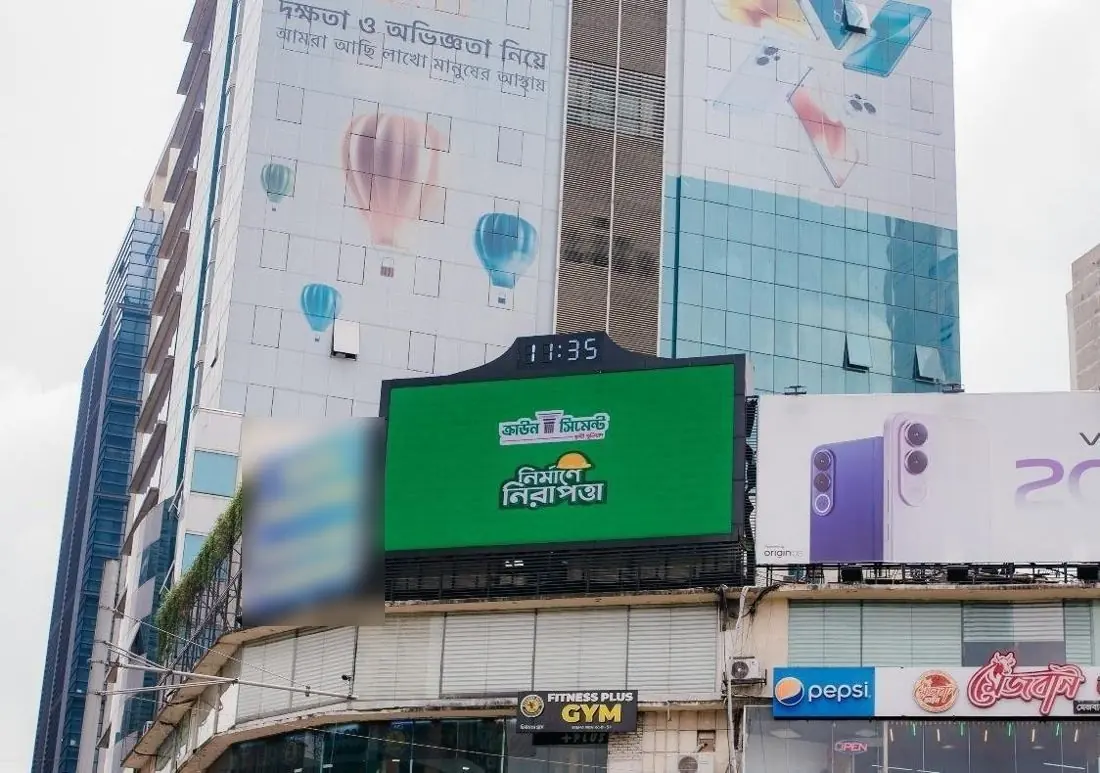
Picture three boards on the same Dhaka road. One plays video. One shows a single printed picture and never blinks. One flips its face every few seconds, like a patient card dealer. All three are billboards, and they do very different jobs. So which one should carry your campaign?
The short answer: in the LED billboard vs static billboard question, pick LED when your message has a date or needs to change, and pick static when you want to own one junction all year. A tri-vision billboard sits between the two: it is printed like a static board, but it moves and shows three faces from one frame.
AD Pro runs all three formats, so I have no reason to push you towards one of them. Here is how I would think it through.
The types of billboards in Bangladesh that AD Pro runs
AD Pro runs three billboard formats: LED screens, static billboards and tri-vision boards.
- LED screens: an LED billboard network of 54 locations in 10 cities, from Dhaka to Chattogram, Sylhet and Cox's Bazar.
- Static billboards: static billboard advertising at 28 sites in Dhaka. The list includes roadside billboards, mid-island boards, a building wrap and a neon sign.
- Tri-vision: three tri-vision billboards in central Dhaka, each with three rotating faces.
LED billboard vs static billboard vs tri-vision: comparison table
The three formats differ in five ways: how the ad is shown, how often it can change, how long you book, what artwork you need, and what each one is best at.
| Question | LED billboard | Static billboard | Tri-vision billboard |
|---|---|---|---|
| How the ad is shown | As a video spot in a loop of short spots. Most AD Pro screens are on air 7 am to 7 pm. | As one printed face that stays up day and night. The expressway board at Chairman Bari Crossing is lit. | As three printed faces on rotating slats, shown one after another. |
| How often it can change | Whenever you like during the campaign. No reprint needed. | Only when the face is reprinted and remounted. | The board changes by itself every few seconds. Each face is still print, so new artwork means a reprint. |
| Booking length | By minutes a day on each screen, usually 30 or 60, for the days you choose. | One site for twelve months as standard. | One site with all three faces booked together. It suits long-running presence, so confirm the term when you call. |
| Artwork needed | One MP4 video. AD Pro adapts it to each screen size in your plan. | One design. AD Pro prints and mounts it. | Three designs for the same 20 × 10 ft frame. |
| Best use | Launches, dated offers and campaigns in several cities. | Year-round presence at one landmark spot. | Several products, or a message told in three steps. |
What is the difference between an LED billboard and a static billboard?
An LED billboard is a screen that plays your video for a set number of minutes each day. A static billboard is a printed face that shows one image the whole time. One is airtime, the other is a fixed spot.
How an LED billboard works
Each screen plays a loop of short spots through the day. You choose the screens and the minutes a day you want on each one. On most AD Pro screens the minimum is 60 minutes a day, and on some, such as Golpahar Moor in Chattogram, it is 30. With a standard 15 second spot, 60 minutes works out at 240 plays a day on one screen.
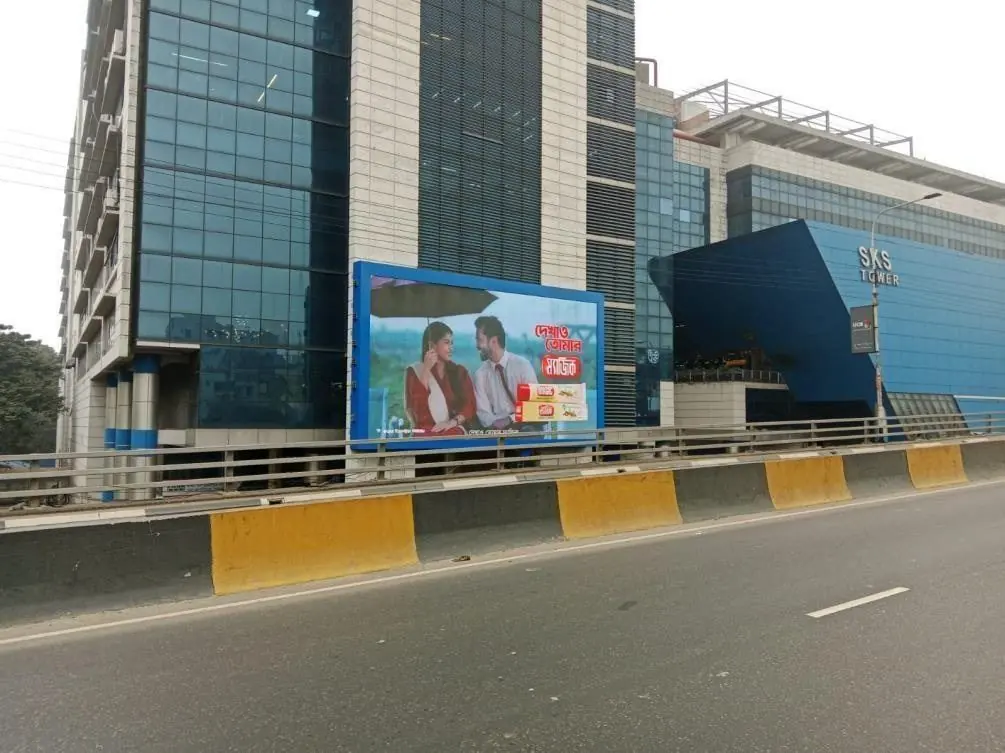
The screens are not all the same, which is why the site data matters. Two examples from our list:
- SKS Tower, Flyover View in Mohakhali is 50 × 30 ft, the largest screen in AD Pro's network. It is a P10 screen with a 3840 × 2160 resolution, and it faces the Mohakhali Flyover.
- Gulshan Circle-1, Upper is 30 × 20 ft, P5, 1920 × 1080, on air 7 am to 7 pm. It faces Police Plaza and Mohakhali.
That P number is the pixel pitch. A smaller number means a finer picture up close, which matters more near eye level than on a flyover.
The real strength of LED is change. You can run a teaser this week and the offer next week, with no reprint and no crew on a ladder. Once your content is approved, a campaign can be on air within 48 hours.
How static billboard advertising works
A static billboard is simple, and I mean that as praise. One booking holds one site for twelve months. AD Pro handles the printing, mounting and permissions, and keeps the face clean and intact through the year. If the artwork needs to change mid-year, we reprint and remount.
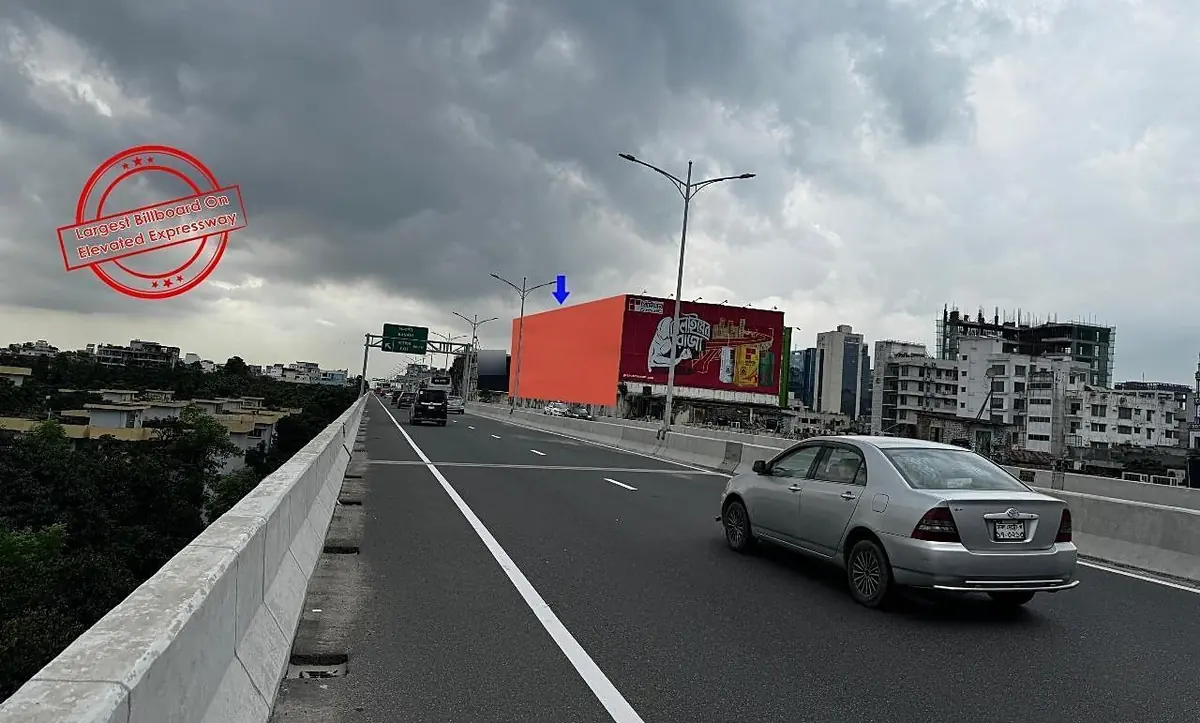
What you get in return is the whole face, all the time. No loop, no waiting for your turn. Some examples of how varied static can be:
- The Dhaka Elevated Expressway board at Chairman Bari Crossing is a lit 125 × 40 ft face that looks towards Mohakhali and the airport.
- The Mirpur-10 to Agargaon mid-island boards are fifty double-sided 4 × 8 ft boards on the road divider.
- Ramna Bhaban Moor in Gulistan is a building wrap with two faces, one 90 × 70 ft and one 40 × 80 ft.
Digital billboard vs traditional billboard: the trade-off
Think of LED as renting a slot on a busy stage, and static as owning a wall on the same street. On the stage you can change your act every night, but you step aside for the next performer. The wall is yours day and night, but repainting it takes a crew. Neither is better.
What is a tri-vision billboard?
A tri-vision billboard is a board made of three-sided slats that rotate together, so one frame shows three different faces in turn. Every few seconds the slats turn and a new face appears.
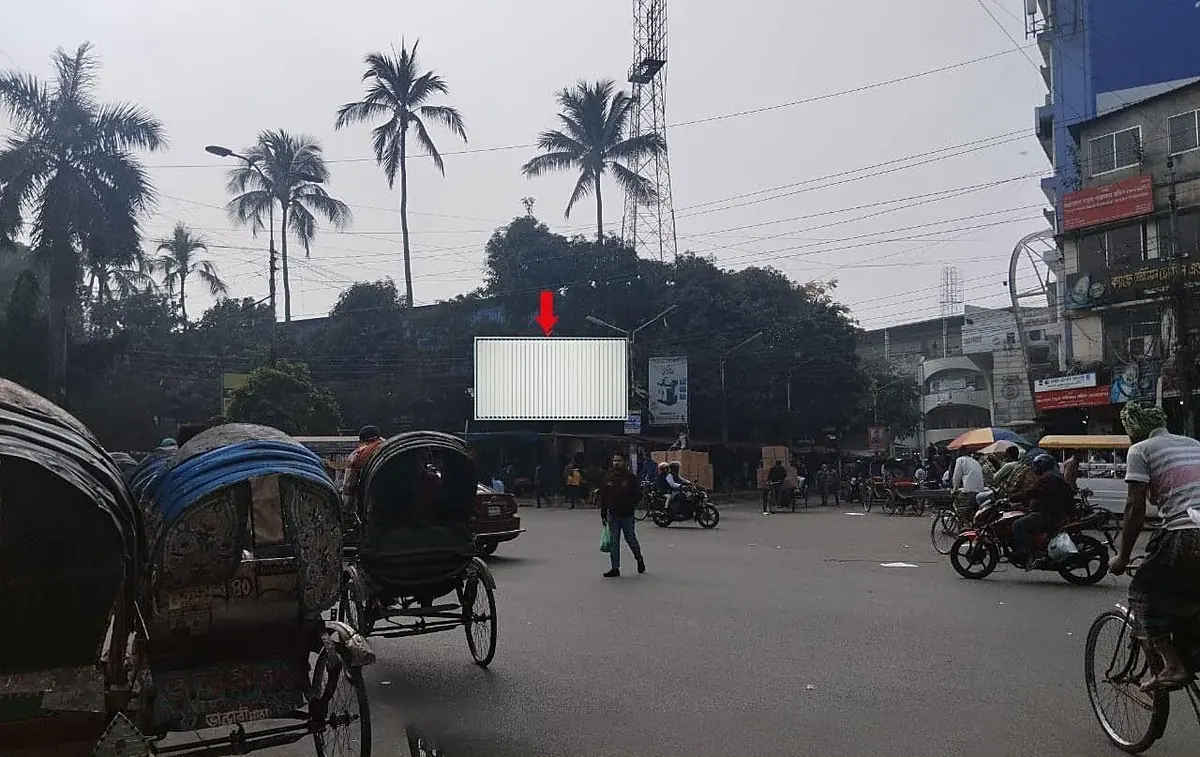
AD Pro has three of these, all in central Dhaka, and all 20 × 10 ft with three faces. That is 600 sq ft of display on each board.
- Jibon Bima Tower, Stadium Gate 3, facing Motijheel and Dainik Bangla.
- Tennis Club, Shahbagh, facing Motsho Bhaban.
- Paribagh, facing Bangla Motor.
How do brands use three faces? Two ways, mostly. Run them as a sequence: product, then offer, then call to action. Or give each face to a different product line. The three faces are booked together, so tri-vision suits one brand or one group, not three unrelated advertisers.
My view: tri-vision is the right pick when you want movement but have no video, or when one picture cannot hold everything you need to say. With only three sites, it is a targeted choice and not a network.
Which billboard type is best for a product launch?
For most product launches, I would start with LED. A launch has a date, the message changes as the weeks go by, and LED is the only format of the three that keeps up without a reprint.
A simple launch plan could look like this:
- Before the day: a short teaser on a few screens where your buyers already are, such as the Gulshan screens for an office-going crowd.
- Launch week: swap in the full product video and add more screens or more minutes.
- After launch: change the video again to the offer, or to where people can buy.
There is one case where I would add a static board from day one. If the product will be sold from the same showroom or outlet for years, a year-round board nearby keeps working long after the launch noise fades. LED announces. Static reminds.
Can I use more than one format in one campaign?
Yes, and it often works better than one format alone. The formats cover each other's gaps. A static board gives you a permanent home at one junction, and short LED bursts add reach and fresh messages around it.
Two combinations I like:
- Static plus LED: one landmark board all year, with LED airtime during launches, Eid and other peak seasons.
- Tri-vision plus LED: three product faces rotating in central Dhaka, with video on screens in the other cities you sell in.
How to choose: my three-question rule
Choose by answering three questions in order. They settle most cases.
- Does your message have an end date, or will it change? If yes, go LED.
- Do you want to be part of one location for a full year? If yes, go static.
- Do you have three things to say and no video to say them with? If yes, look at tri-vision.
This post leaves out the commercial side on purpose. The right plan depends on your sites, dates and airtime, so call us and AD Pro will share a plan built around your campaign.
So, which billboard should you book?
Book LED for a message that changes, static for a spot you want to hold all year, and tri-vision when you have three things to show. LED is airtime: video, flexible, booked by minutes a day, strong for launches and dated offers. Static is a fixed spot: one printed face, booked for twelve months, strong for long-term presence. Tri-vision is the middle path: three printed faces that rotate on one board, at three sites in central Dhaka.
Start with your message, not the format. Once you know how long it must live and how often it will change, the choice gets easy.
Want to see what is open for your dates? Call or WhatsApp +880 1958-503753 to check availability, or browse every site by city, area and format in the AD Pro locations directory.
Frequently asked questions
- What is the difference between an LED billboard and a static billboard?
- An LED billboard is a screen that plays your video in a loop of short spots, booked by minutes a day, and the video can change at any time. A static billboard is one printed face on one site, usually booked for twelve months, and it changes only when it is reprinted.
- What is a tri-vision billboard?
- A tri-vision billboard is made of three-sided slats that rotate together, so one frame shows three different faces one after another. AD Pro runs three in central Dhaka, at Motijheel, Shahbagh and Paribagh. Each board is 20 × 10 ft with three faces.
- Which billboard type is best for a product launch?
- LED is usually the best start for a product launch. A launch has a date and the message changes from teaser to launch to offer, and LED handles that without a reprint. Add a static board if you also want year-round presence near your outlet.
- Can I use more than one format in one campaign?
- Yes. A common plan pairs a static billboard at one landmark site with LED airtime during launches and peak seasons. Tri-vision can sit alongside both when you have several products to show. AD Pro plans all three formats together as one campaign.
- How do I book a billboard with AD Pro?
- Call or WhatsApp +880 1958-503753 with your city, dates and a rough idea of scale. AD Pro checks availability, comes back with a plan and photos of each site, and handles artwork, permissions and installation once you approve.